Auto radiator repair service in Tulsa. Overheating, leaks and cooling faults diagnosed and repaired at your location. Call 918-918-4749.
Mobile auto radiator repair in Tulsa: we come to you
We bring cooling system testing and radiator repair to your vehicle in Tulsa, at home, at work or wherever the car has stopped.
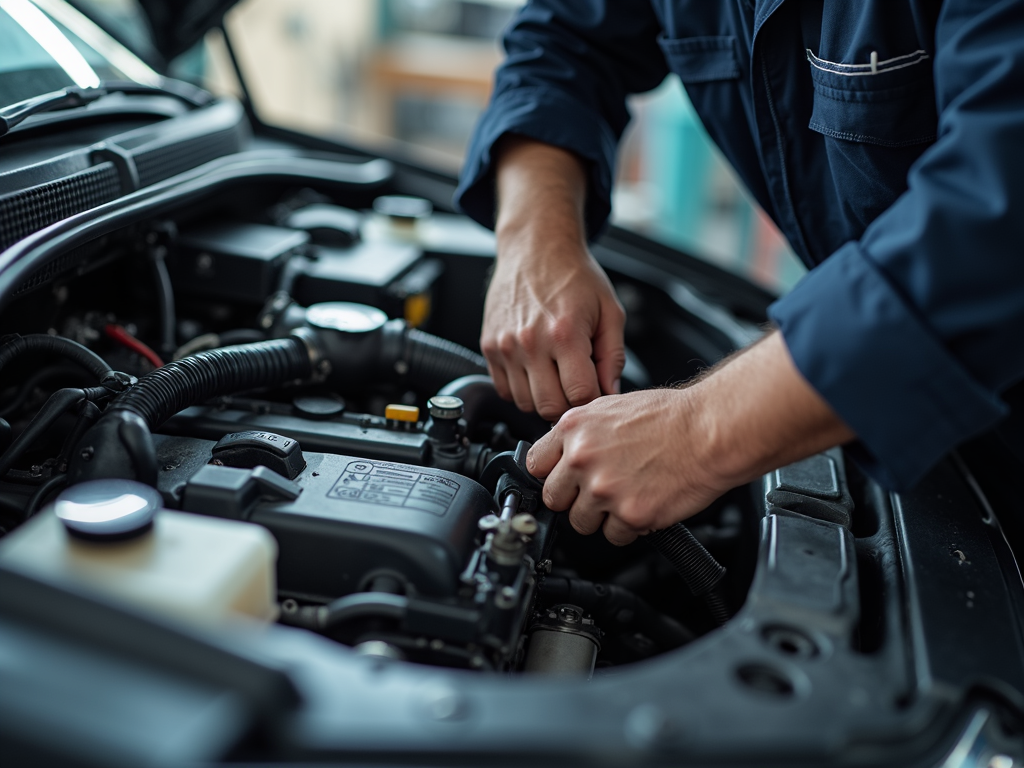
Overheating in traffic but fine on the highway is usually airflow rather than a blocked radiator. Pressure testing and checking the fan, thermostat and coolant is what separates a hose from an engine.
Years of Proven Expertise
Our team’s skill is built on years of collective experience and continuous training in the latest automotive technologies.
Mobile On-Site Service
Whether it's a minor glitch or a major breakdown, our mobile service runs seven days a week, 7 AM to 7 PM, so help is always just a call away.
Cooling system work covers flushes, coolant condition, hoses, water pumps, fans and leak tracing, with the system pressure tested at your vehicle before anything is quoted.
If that describes your car, the fault is almost certainly airflow rather than a blocked radiator. At speed, air is forced through the radiator whether the fan works or not. In stationary traffic on the Broken Arrow Expressway or I-44, the fan is doing all the work. A failed fan, fan relay or fan temperature sensor produces exactly this pattern.
The opposite pattern, running hot on a long highway run but fine around town, points more at coolant condition, a thermostat stuck part open, or a water pump not circulating properly under sustained load.
Tulsa averages around eleven days a year at 100 degrees or above, and August 2026 alone had twenty of them. Sustained heat is the real test, because the margin between engine temperature and outside air is what sheds heat. On a 100 degree afternoon that margin is small, so a system even slightly below par cannot cope. Old coolant matters more here too: coolant that has lost its corrosion inhibitors lets the radiator and water pump corrode from the inside. See cooling system flush.
Switch the air conditioning off, because the condenser sits in front of the radiator and adds heat exactly where you do not want it. Turn the heater on full, which is unpleasant but genuinely helps, because the heater core acts as a second radiator. If it reaches the red, pull over and switch off. A badly overheated engine can warp a cylinder head, which costs many times what the original fault would have.
Do not open the cap on a hot system. It is pressurised and the coolant is above boiling point. Leave the hood shut for at least half an hour.
People arrive at a radiator repair expecting the worst, and a fair share of overheating turns out to be something small that was left too long.
All four are found by testing rather than by replacing parts in order of expense.
This is the question behind most overheating calls, because the answer changes the bill enormously. The signs that point beyond a simple cooling fault are white smoke from the exhaust that smells sweet, coolant disappearing with no visible leak, oil that looks like coffee with milk, or bubbles rising in the reservoir with the engine running.
None of those is proof on its own, and there is a straightforward test for combustion gases in the coolant that settles it. We would rather run that test than let you spend money on a radiator that was never the problem.
It depends on what failed and where it sits. A hose or thermostat is a modest job; a radiator is more. You get the price before work starts.
Call 918-918-4749. A cooling fault found early is a hose. Found late it is an engine.
A cooling fault caught while it is still a hose or a relay costs a fraction of one that reaches the cylinder head, so a gauge creeping up in traffic is worth a call that week.
Call: 918-918-4749
Mobile Mechanics Tulsa
8933 E Marshall St
Tulsa, OK 74115
Open seven days a week, 7 AM to 7 PM